Original oil painting on canvas covered board
Painted area 50×60cm
We are all humans, with hopes, needs and beliefs that help us navigate the beautiful chaos that is life. So while this painting was inspired by the merging of the Ancient Briton and the Anglo Saxon peoples in Britain, it is really about how our human similarities outweigh our ethnic or cultural differences.
While many of us continue to believe in ‘us’ and ‘them’, modern DNA tests are proving that regardless of our beliefs, we are far more interconnected than we think. Tribes and peoples have fought each other throughout the history of the world, but eventually those who exist in the same space can’t help but succumb to the human desire to breed, connecting bloodlines and confirming the basic humanity at the core of all of us.
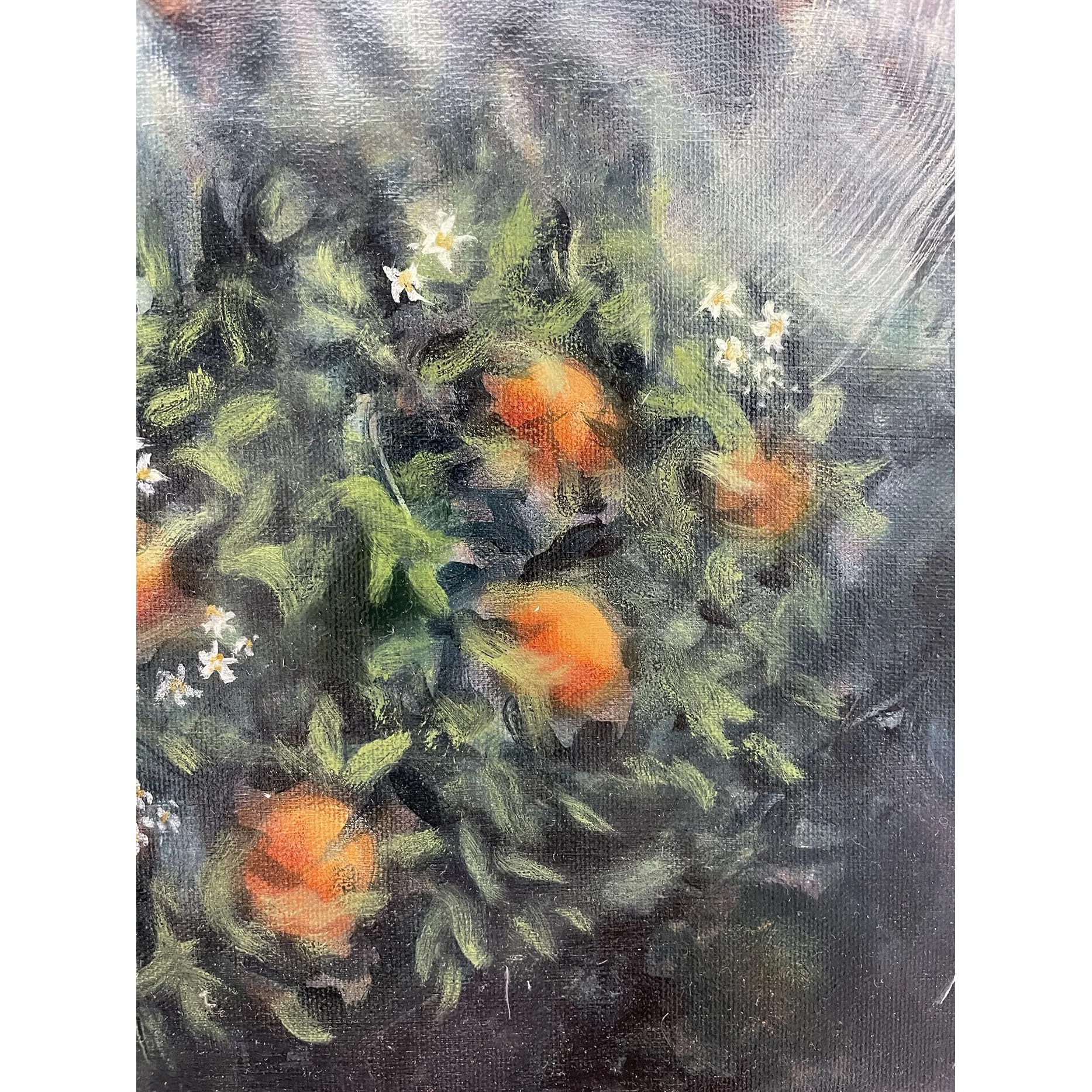
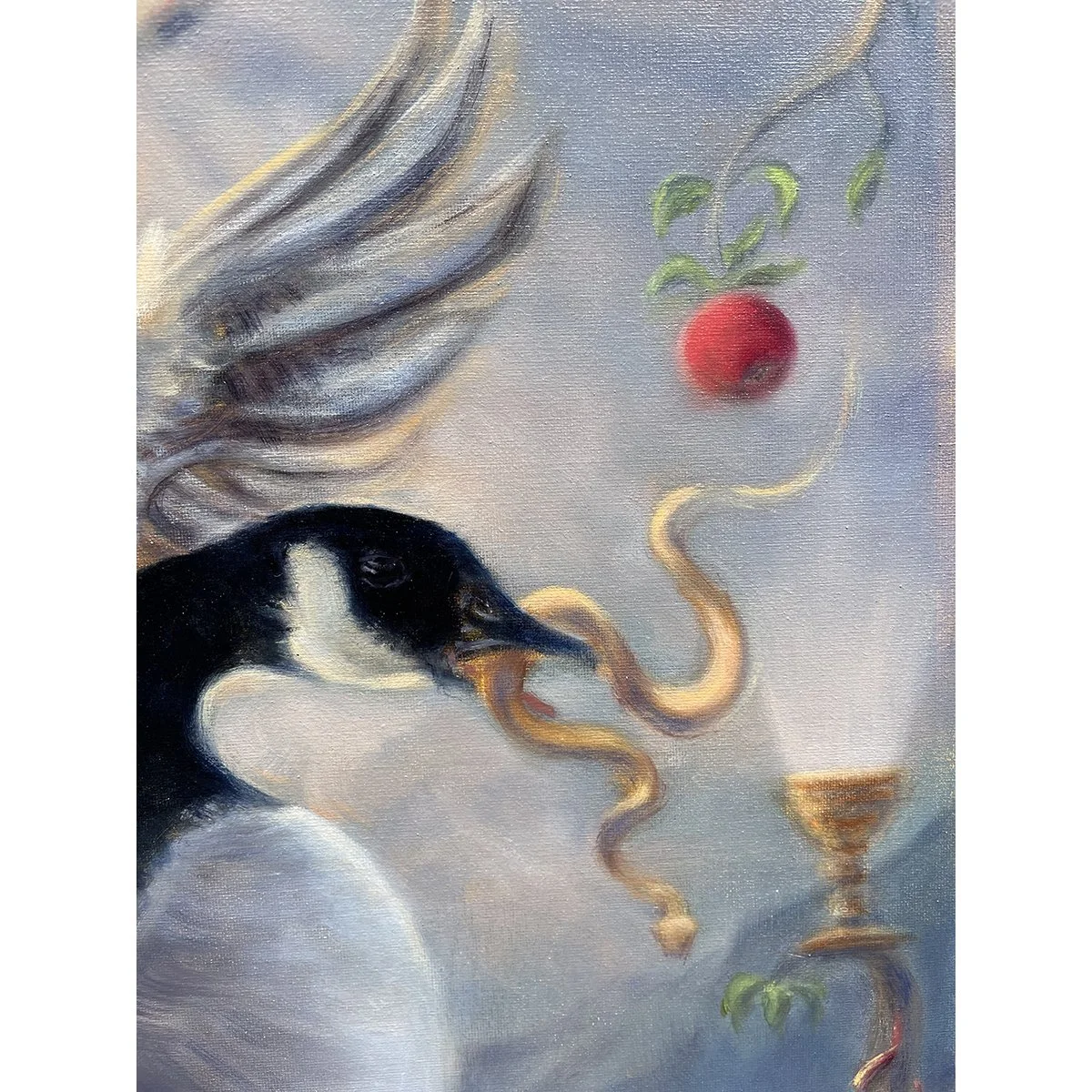
This painting is rich with symbolism from the stories the Briton and Saxon peoples told, and the deities, animals and mythical beasts that were significant to their belief systems.
More detail on the symbolism and my inspirations for this painting below…
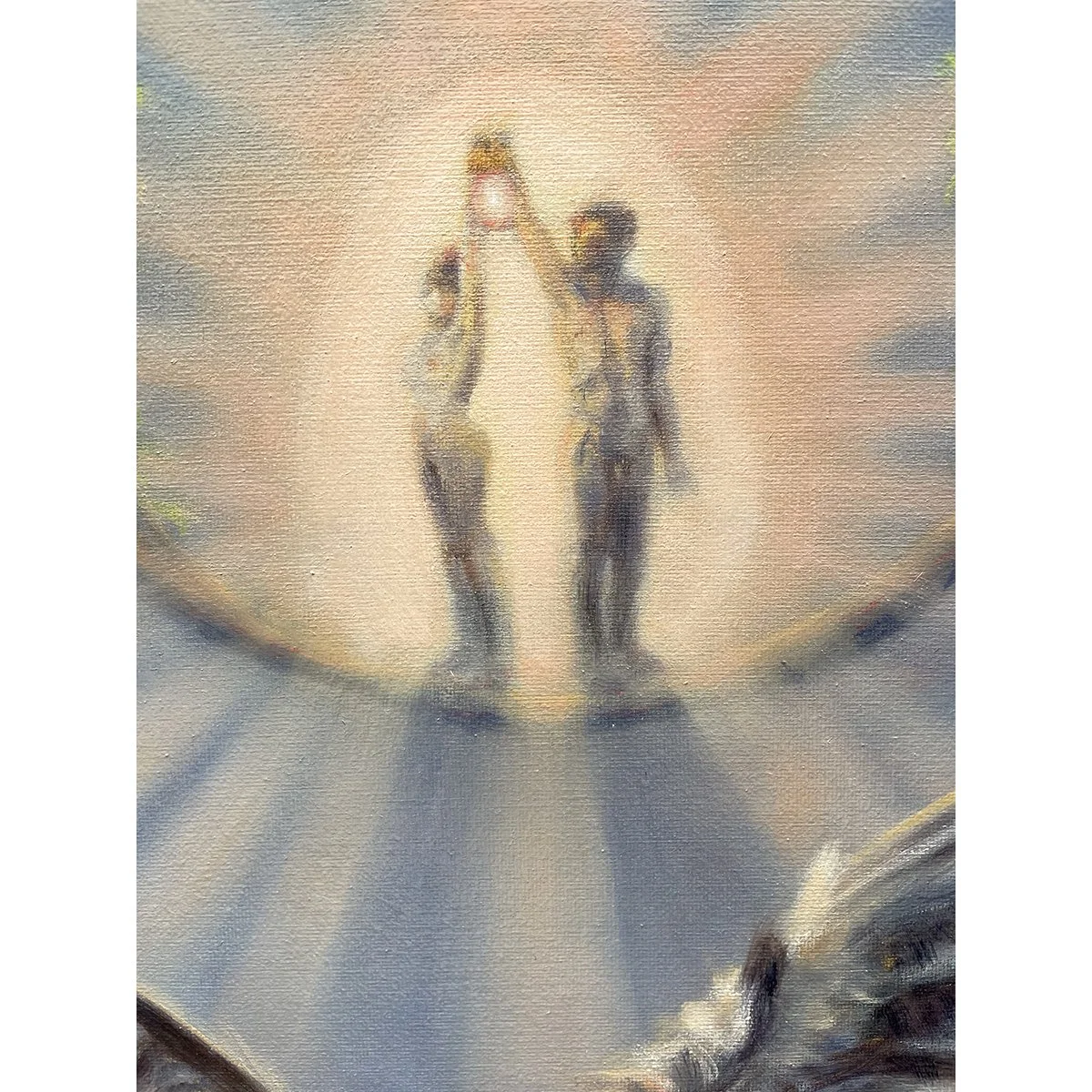
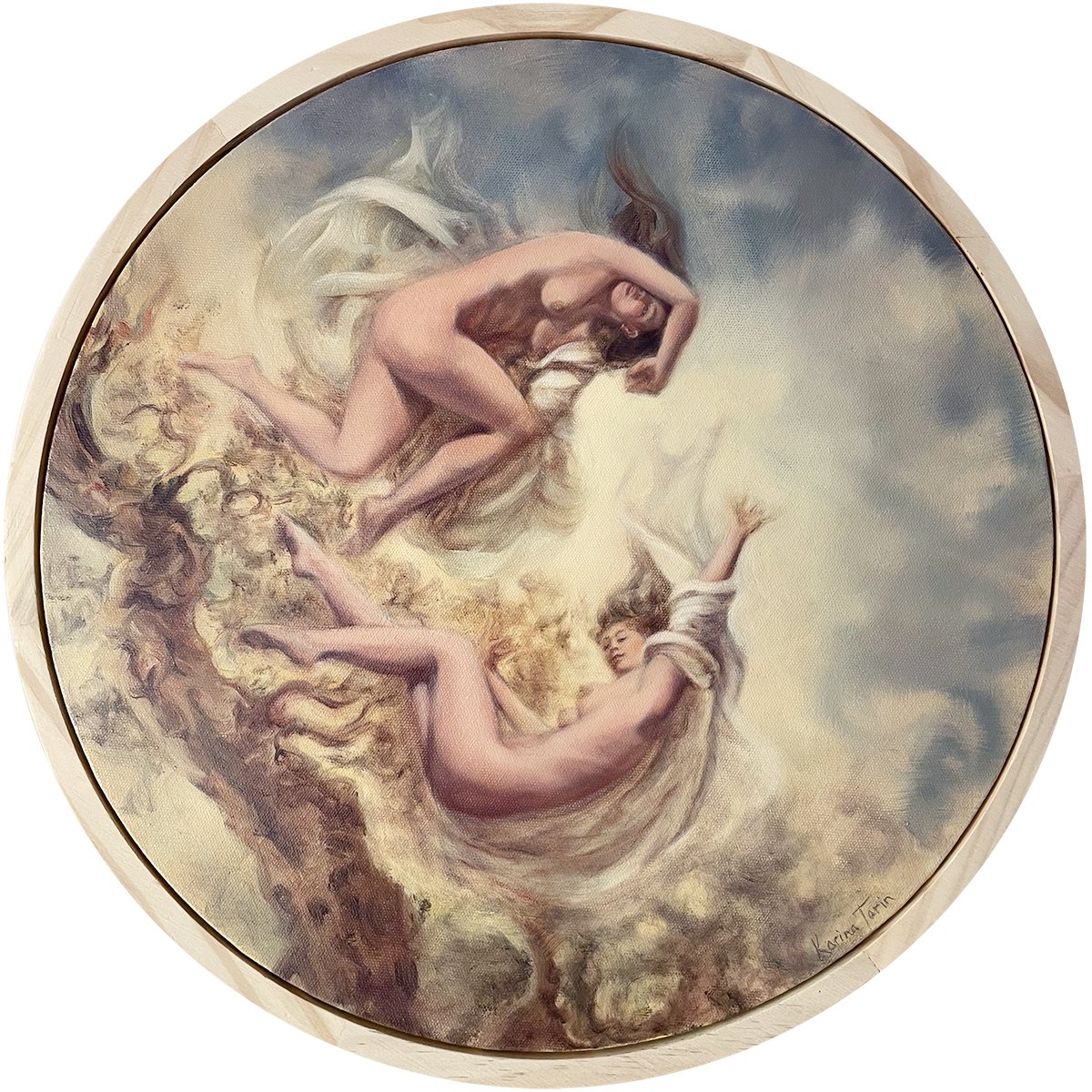
The goddesses in the centre represent the Britons and Saxons respectively, and the opportunity we all have to co-exist peacefully if we are willing to recognise the humanity in ‘the other’.
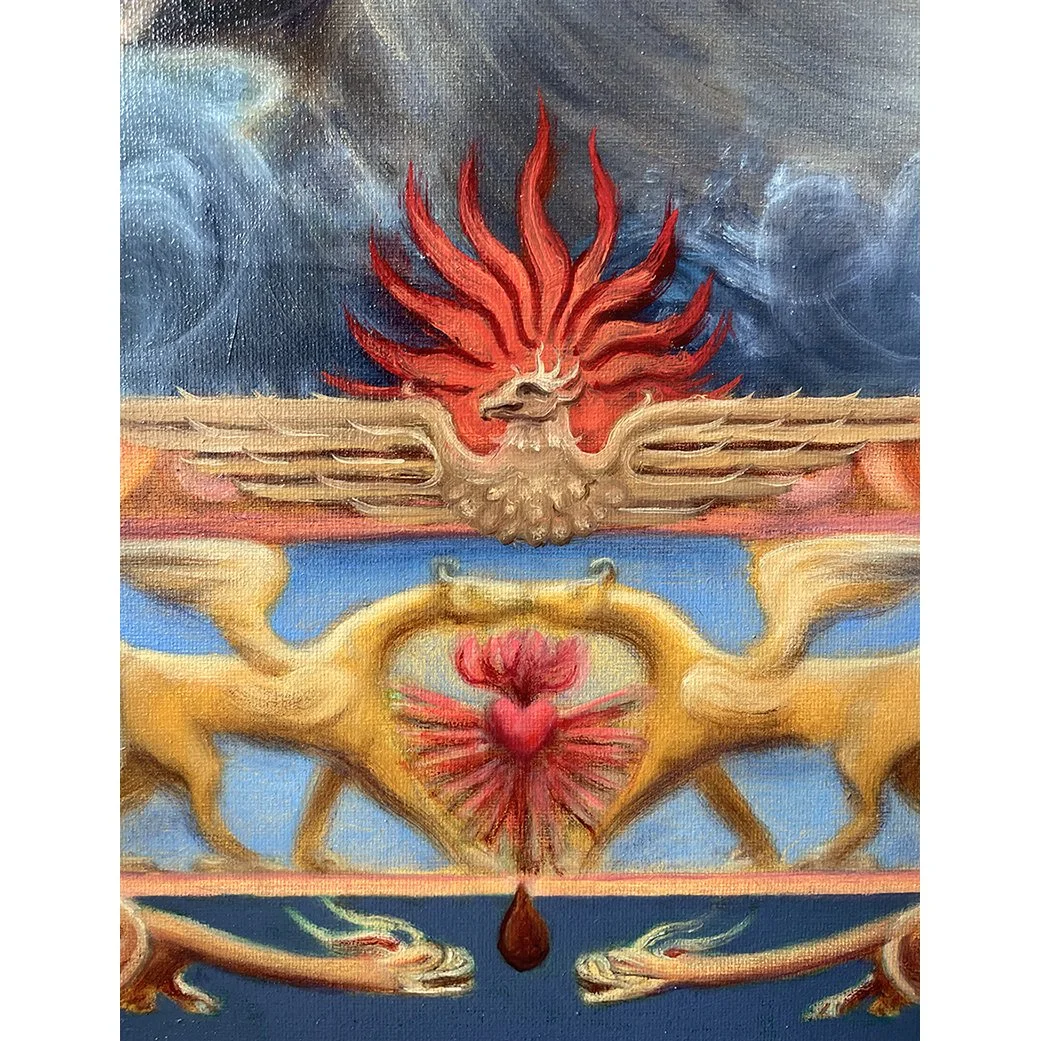
The narrative borders take their symbolism from the myths and beliefs of both peoples, and are also inspired by medieval art and illuminated manuscripts (especially the Book of Kells).
The animals depicted towards the top of the painting (horse, wild boar and pair of ravens) were of great importance to both the Ancient Britons and the Anglo Saxons - in their lives, stories and their old religions.
The creatures towards the bottom of the painting are symbols from Christianity (the incoming religion at that time), inspired by illuminated manuscripts that survive from that period. For example, the peacock represents the incorruptibility of Christ (its flesh was thought to resist decay), the winged Ox is symbolic of Saint Luke, and the lion creature symbolises resurrection (it was thought that the female lion gave birth to dead cubs, but the male lion would return after three days, breathe on them, and they would come to life).
Original oil painting on canvas covered board
Painted area 50×60cm
We are all humans, with hopes, needs and beliefs that help us navigate the beautiful chaos that is life. So while this painting was inspired by the merging of the Ancient Briton and the Anglo Saxon peoples in Britain, it is really about how our human similarities outweigh our ethnic or cultural differences.
While many of us continue to believe in ‘us’ and ‘them’, modern DNA tests are proving that regardless of our beliefs, we are far more interconnected than we think. Tribes and peoples have fought each other throughout the history of the world, but eventually those who exist in the same space can’t help but succumb to the human desire to breed, connecting bloodlines and confirming the basic humanity at the core of all of us.
This painting is rich with symbolism from the stories the Briton and Saxon peoples told, and the deities, animals and mythical beasts that were significant to their belief systems.
More detail on the symbolism and my inspirations for this painting below…
The goddesses in the centre represent the Britons and Saxons respectively, and the opportunity we all have to co-exist peacefully if we are willing to recognise the humanity in ‘the other’.
The narrative borders take their symbolism from the myths and beliefs of both peoples, and are also inspired by medieval art and illuminated manuscripts (especially the Book of Kells).
The animals depicted towards the top of the painting (horse, wild boar and pair of ravens) were of great importance to both the Ancient Britons and the Anglo Saxons - in their lives, stories and their old religions.
The creatures towards the bottom of the painting are symbols from Christianity (the incoming religion at that time), inspired by illuminated manuscripts that survive from that period. For example, the peacock represents the incorruptibility of Christ (its flesh was thought to resist decay), the winged Ox is symbolic of Saint Luke, and the lion creature symbolises resurrection (it was thought that the female lion gave birth to dead cubs, but the male lion would return after three days, breathe on them, and they would come to life).
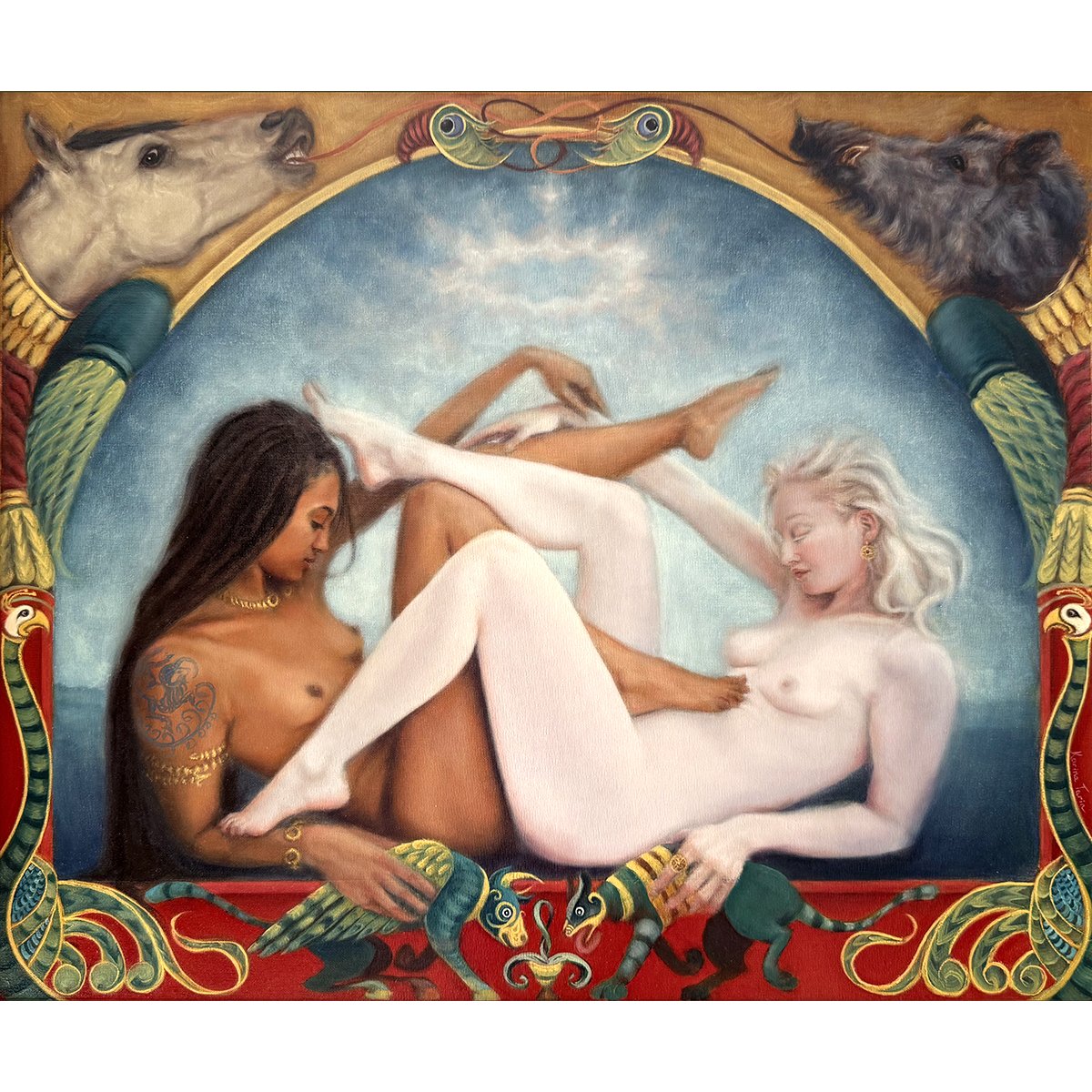 Image 1 of 7
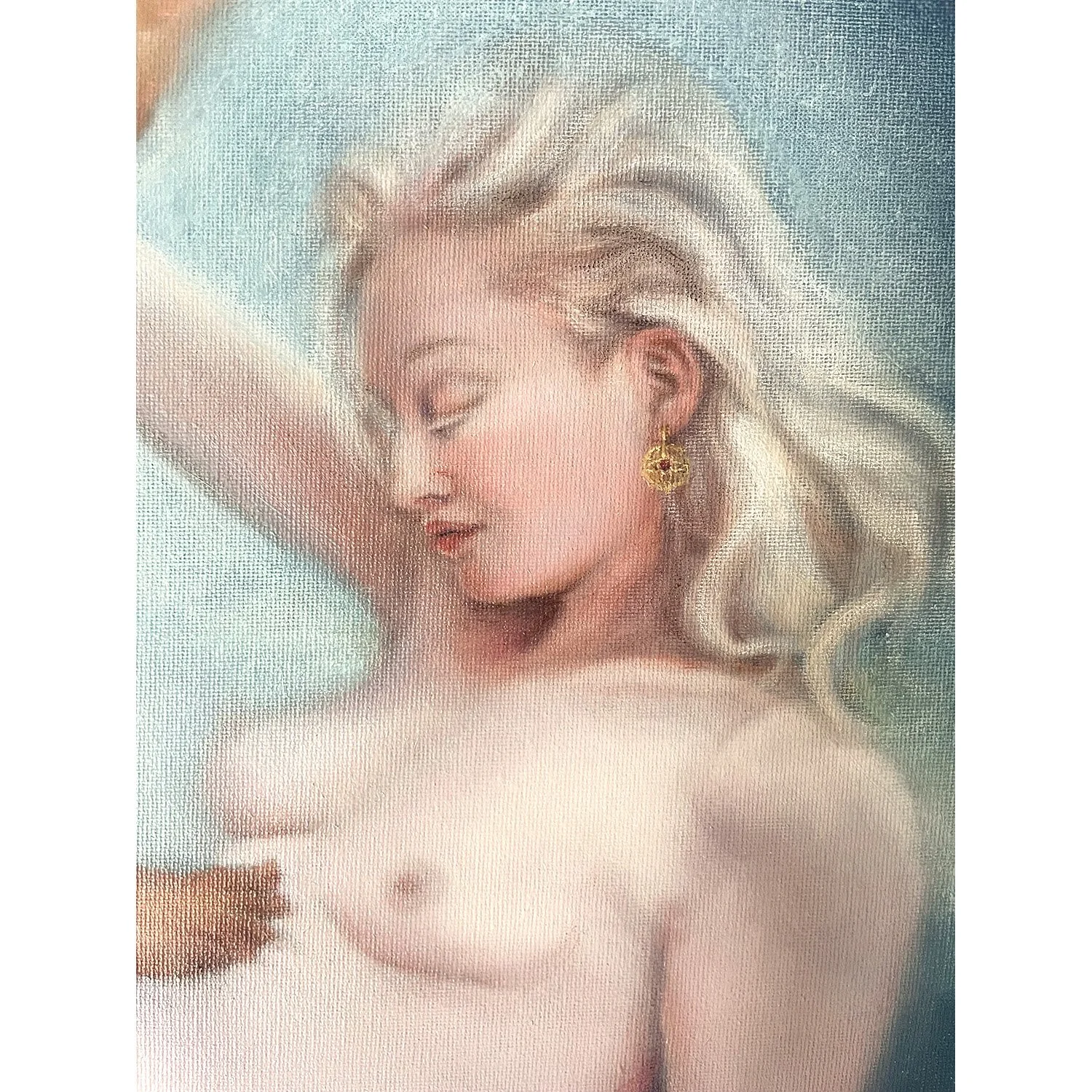 Image 2 of 7
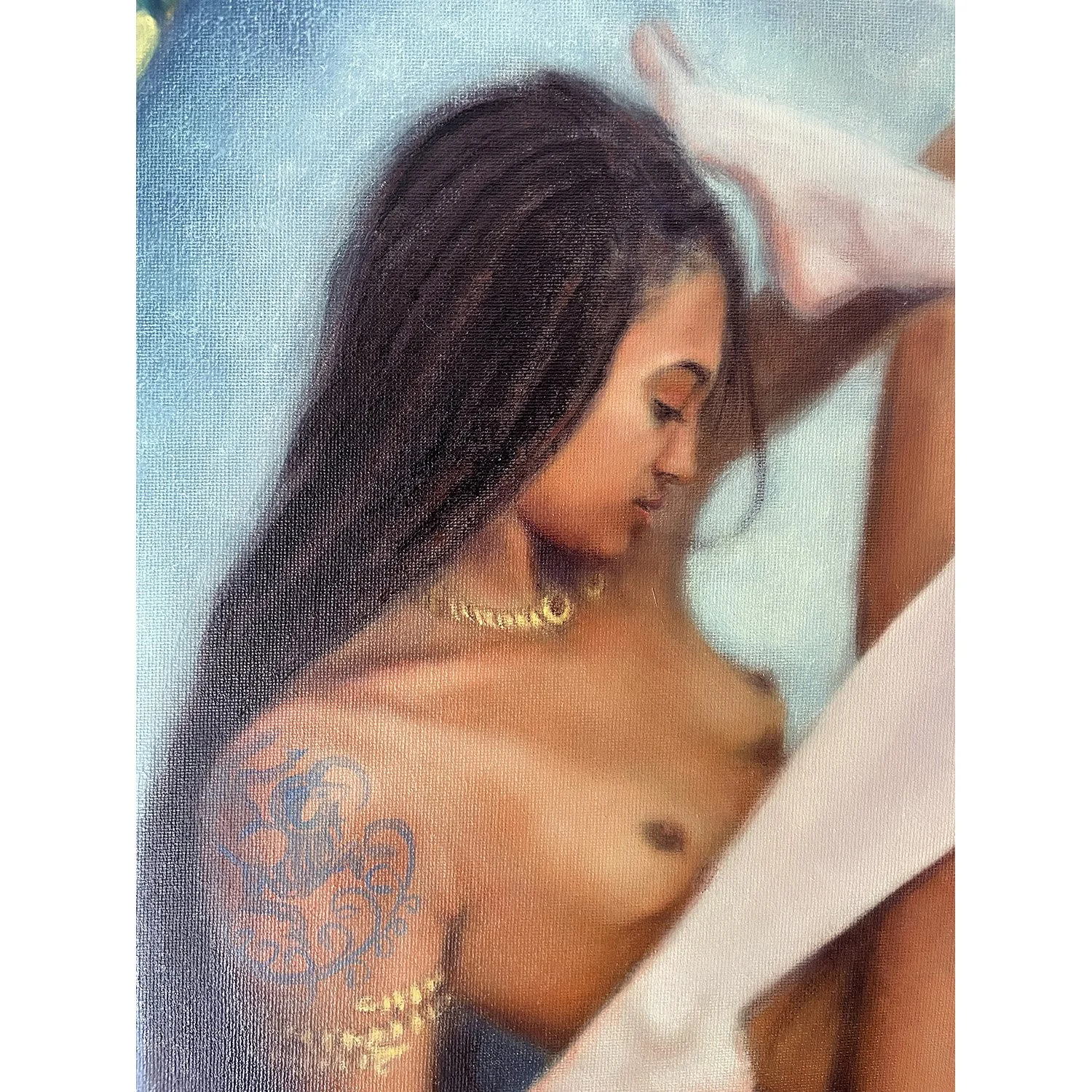 Image 3 of 7
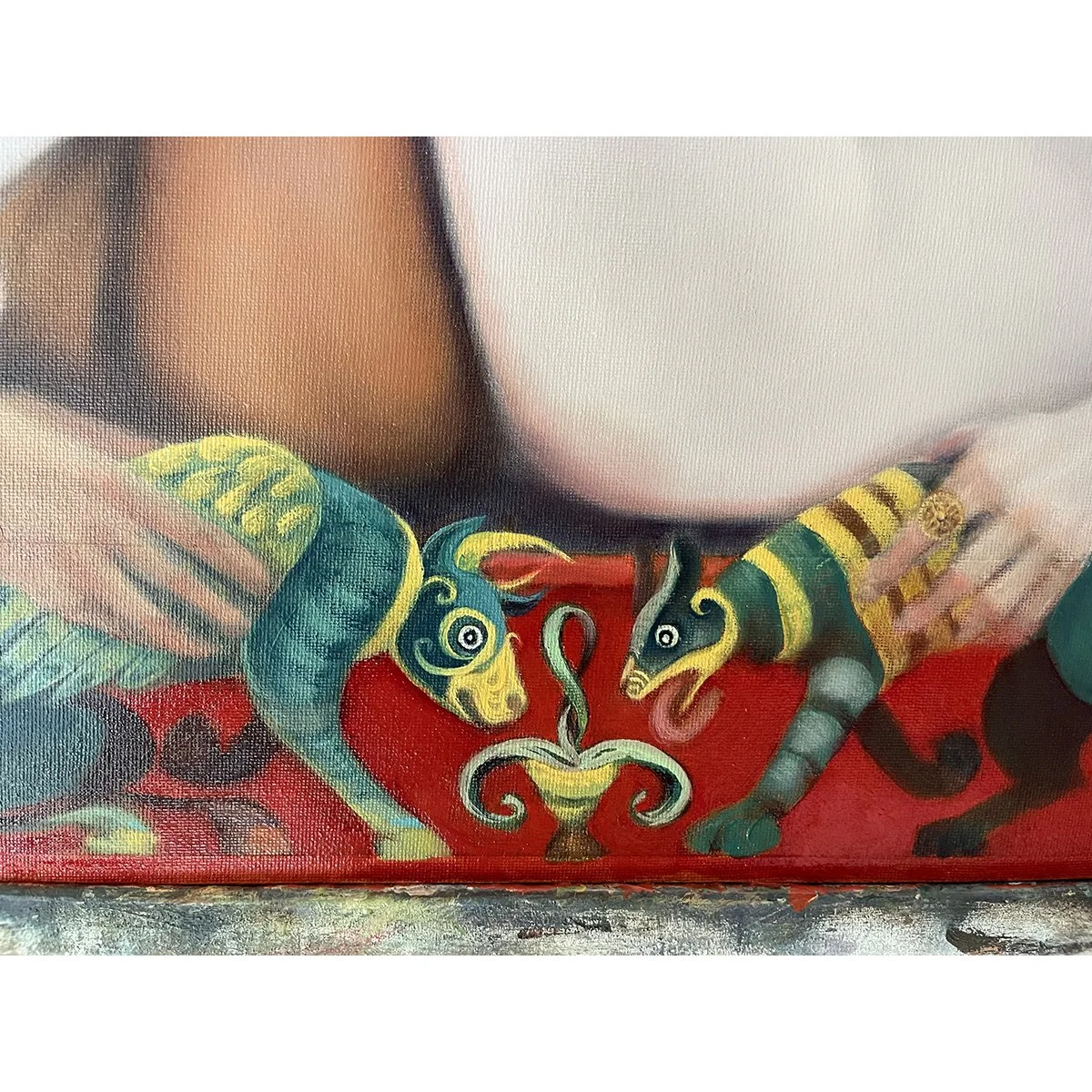 Image 4 of 7
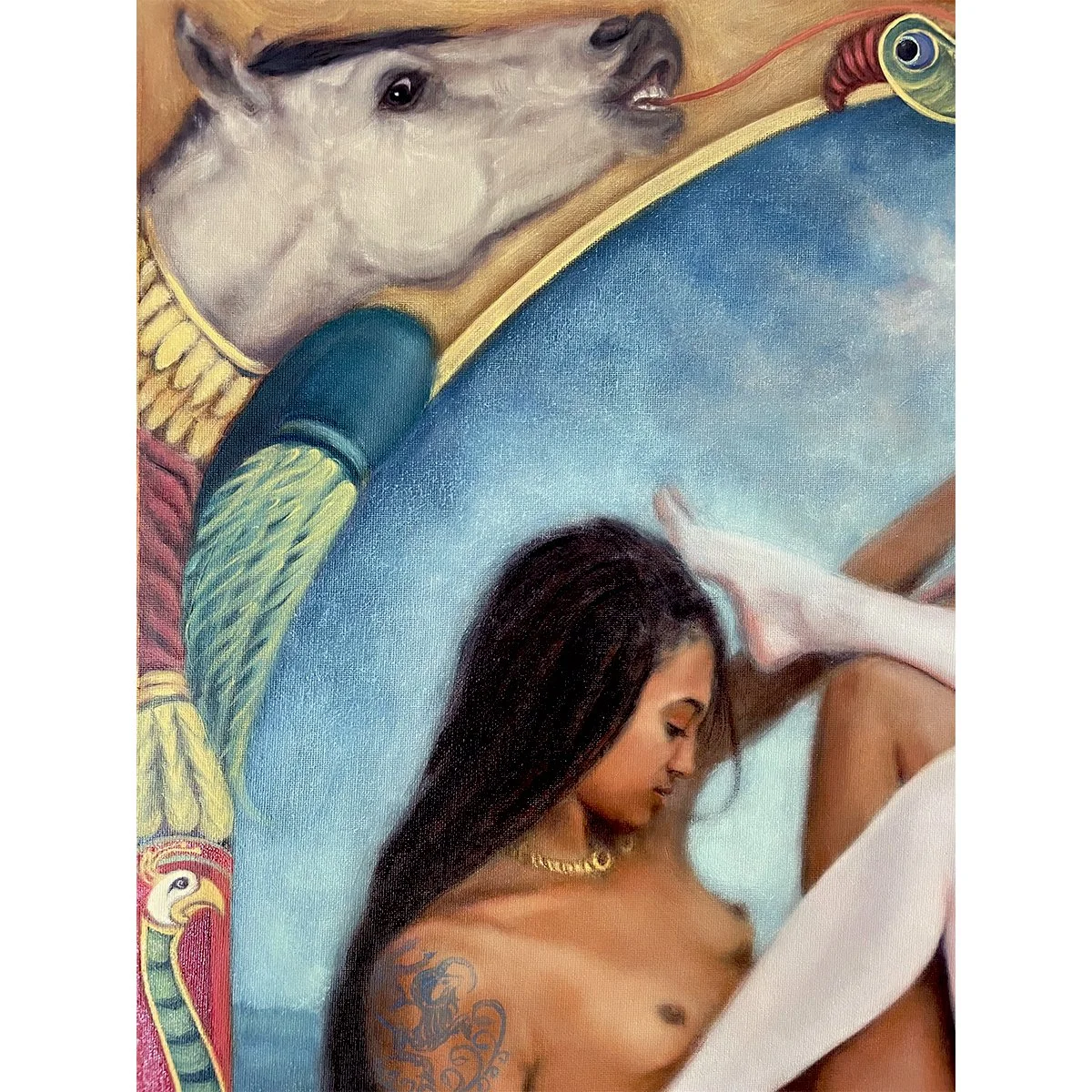 Image 5 of 7
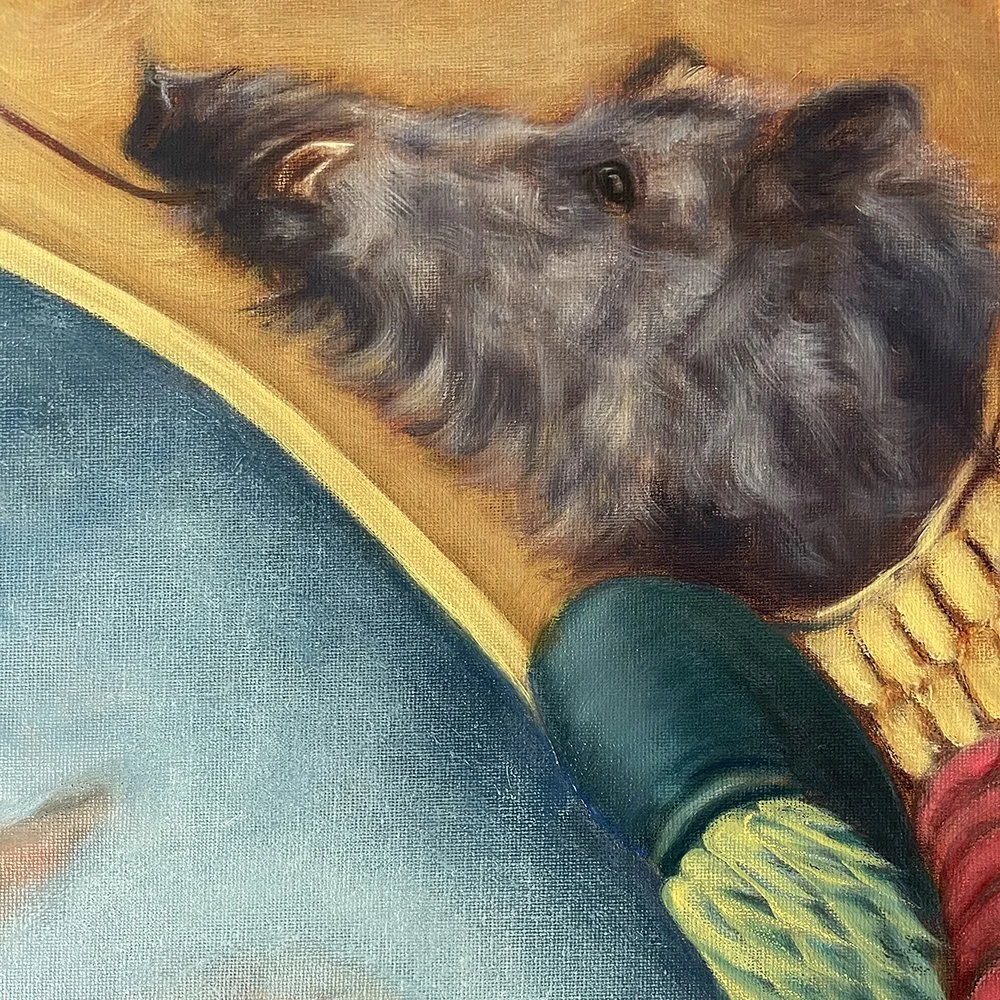 Image 6 of 7
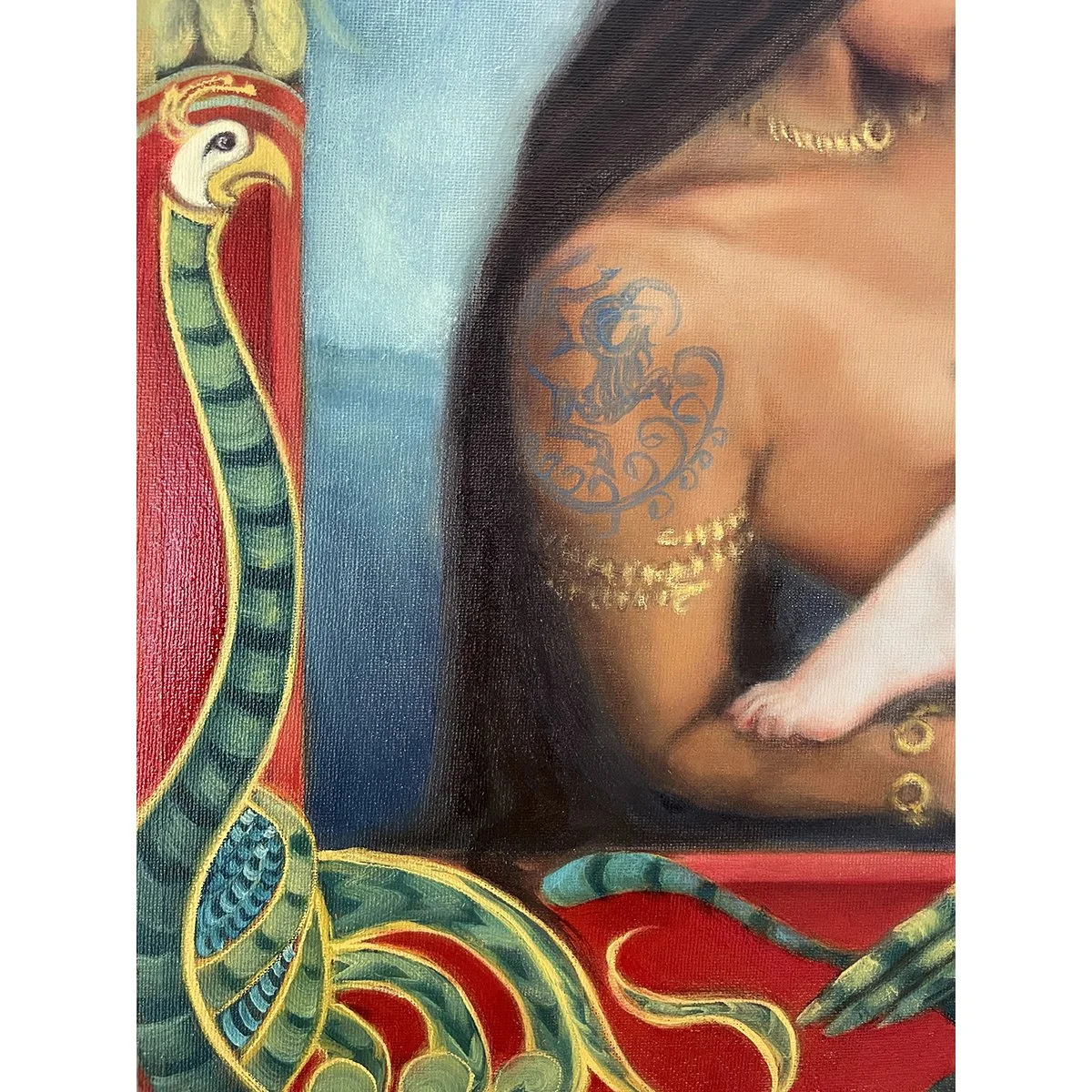 Image 7 of 7